Leadership rarely unfolds under stable conditions. Markets shift, technologies evolve and expectations change. Many organisations try to respond with better tools, faster decision-making or clearer strategies. Yet again and again leaders discover that something else is required: a broader perspective on how organisations actually function.
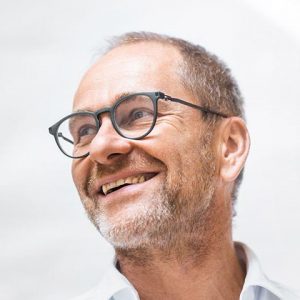
In a conversation with journalist Mari Lang, Trainconsulting managing partner Lothar Wenzl and Thomas Truttmann, CEO of Swiss chocolate manufacturer Max Felchlin AG, this perspective becomes tangible. Their dialogue revolves around a simple but demanding idea: leadership in complex environments requires the ability to trust processes that cannot be fully controlled.
The language of the podcast is in German.

Looking beyond structures and processes
In many organisations, leadership is still closely associated with structures, targets and processes. Clear responsibilities are defined, plans are developed and performance is measured. These elements remain important. But they rarely tell the whole story of how organisations actually work.
What often shapes decisions just as strongly are relationships, shared assumptions and the history of collaboration within a company. How people interpret situations, how they communicate and how trust develops across teams can influence outcomes as much as formal structures do.
Leaders who recognise these dynamics gain a richer understanding of their organisation – and more options for shaping change.
Leadership as a learning journey
This shift in perspective often begins with personal curiosity: the willingness to question familiar leadership models and explore new ways of understanding organisations.

For Thomas Truttmann, this curiosity led him to invest in his own development and participate in the Systemic Change Management programme at Trainconsulting. What started as a personal learning journey soon revealed its organisational relevance.
When leaders broaden their perspective, the effects rarely remain individual. They influence how conversations are conducted, how decisions are framed and how change initiatives are approached.
In this sense, leadership development is not separate from organisational development. It shapes how organisations think, collaborate and evolve.
Navigating ambiguity


A recurring theme in the conversation is the role of ambiguity in leadership.
Many organisations still treat uncertainty as something that needs to be eliminated. Planning and control are meant to provide clarity and predictability. Yet the environments in which organisations operate today are inherently complex. Supply chains shift, technologies develop rapidly and societal expectations change. In such conditions, leadership cannot rely solely on certainty. It requires the ability to move forward even when not every variable can be predicted.
Rather than having all the answers, leaders increasingly create spaces where different perspectives can meet, where ideas can be tested and where organisations can learn their way forward.
Leading change in established organisations
When Thomas Truttmann became CEO of Max Felchlin AG, he stepped into a company with a long tradition. His predecessor had led the organisation for three decades – a continuity that had shaped both culture and identity.

Introducing new perspectives in such an environment inevitably requires sensitivity. Change does not happen in isolation from the past; it interacts with established routines, expectations and relationships. Effective transformation therefore rarely comes from imposing new solutions quickly. It develops through dialogue, through careful observation and through the willingness to engage with the organisation as it is. This often demands patience – and a readiness to work with tensions rather than trying to remove them immediately.
Trust in the process
This leads to the central idea of the conversation: trusting the process.
In leadership practice, this does not mean stepping back or letting things unfold randomly. It means recognising that meaningful change develops over time. New perspectives need space to be explored. Conversations need time to evolve. And organisations often move forward through cycles of reflection, experimentation and adjustment. Trusting the process means staying engaged in these dynamics while resisting the urge to close questions too quickly.

Leadership in a changing world
The challenges organisations face today are unlikely to become simpler. Economic volatility, technological disruption and societal change will continue to shape how companies operate. In this environment, leadership requires more than strategic planning. It requires curiosity, reflection and the ability to engage with complexity. Leaders who cultivate these qualities strengthen not only their own capability but also the resilience of the organisations they lead.
And sometimes, one of the most powerful leadership moves is surprisingly simple: trusting the process.