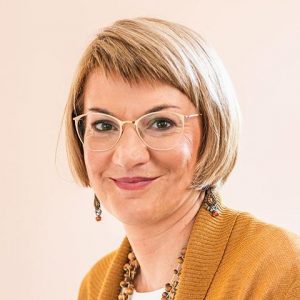
»Thanks to our deep roots, we can face the future with confidence.«

The subsidiary in Hungary seems to have inherited a fundamental value from the parent company: Trust in a successful long-term future. This enables change processes, which are often more difficult to implement in other companies. Today, Gebrüder Weiss Hungary is a pioneer in knowledge transfer and automated projects for the entire Group.
500 YEARS OF TRUST
The history of Gebrüder Weiss began as early as 1487 with the Lindauer messengers who connected the trading centres of Milan and Lindau. Back then, the messengers travelled for almost a week, on their own and yet with a clear mission. Today, it would be hard to imagine not seeing or hearing from employees for a week and still trusting THE DAUGHTER IN HUNGARY to successfully fulfill the mission. But it is precisely this trust that has characterised Gebrüder Weiss for centuries.
The company has a long tradition of trusting in success, even over long distances. These roots are also reflected in a deeply embedded corporate culture, which today serves as a beacon for many other organisations.
THE DAUGHTER IN HUNGARY
In 1989, Gebrüder Weiss – at that time still under the name Hungaroweiss Kft and as of 2005 Gebrüder Weiss Kft – put out its feelers to Eastern Europe and founded its first location. Over the years, the company has grown steadily and now has nine locations and around 450 employees in Hungary. The location has developed into a central hub for Central Eastern Europe (CEE) and is considered one of the most modern in the entire Group.
The first enquiry to Trainconsulting was to learn large group methods and integrate them into the company. But the underlying question had to be clarified first: Why and for what purpose did Gebrüder Weiss Hungary want to use large group methods? What does the support of the method make possible, what change should it bring about? In the first workshops with the steering group, the two consultants Anita Lung and Elvira Kalmár refined the assignment and focussed on strengthening internal cooperation, personal initiative and the decision-making ability of middle management.
Giving enough space to the ‘why’ was a very important point at this stage of the project: Only with a common, defined purpose could a good plan with verifiable goals be developed.

Overview Gebrüder Weiss Group (2024)
- 8,700 employees
- 2.71 billion € turnover
- 180 locations
Gebrüder Weiss Hungary (2024)
- 420 employees
- 8 locations
LITTLE WILLINGNESS TO MAKE DECISIONS IN MIDDLE MANAGEMENT
The aim was to increase activity and initiative in middle management. Balint Varga, Managing Director of Gebrüder Weiss in Hungary, emphasises: »Our people have enormous potential. We want to fully utilise this potential.« This aspiration formed the the basis for the project.
GROWTH WITH CHALLENGES
The rapid growth of Gebrüder Weiss Hungary brought with it several challenges. Within a short period of time, turnover doubled and the number of employees increased significantly. This sudden increase led to a high workload and a lack of initiative in many areas. The structure of the company could not keep pace with the speed of growth, which led to a lack of connection between the departments. The central question was: How can the company adapt its organisational design for managing growth and strengthening cooperation at the same time?
APPRECIATIVE INQUIRY
Change begins as soon as we start asking new questions. In the first phase, we worked with Appreciative Inquiry, which, as a philosophy, method and procedure, combined what the client wanted: not to focus on deficits, but to initiate new developments. With the help of interviews, a comprehensive picture of the organisation’s successes was created. The conversations focused on the strengths, successes and potential of the organisation. Middle management immediately got involved and took responsibility for these interviews. It was immediately noticeable that many of the things that had worked well had previously been taken for granted and were therefore rarely mentioned. This method also enhanced the reputation of the HR department and gave the team more self-confidence and increased collegiality. 14 managers formed a researcher group analysed all the different positions and evolving patterns in 127 interviews. This comprehensive approach generated a lot of new knowledge and was also the source of gratification l. For example, warehouse employees on the night shift were also interviewed by HR management and felt very valued as a result. At that point, the middle management began to recognise the power of a questioning and curious attitude.
Bálint Varga, Managing Director of Gebrüder Weiss in Hungary

»The programme has really helped us to rebuild bridges between the departments.«
LOCAL LANGUAGE AS AN IMPORTANT FACTOR FOR SUCCESS
With organisational development, the company has embarked on a new, unknown path, which has also triggered many emotions ranging from joy to concern. The entire project was realised in Hungarian, thus ensuring that this emotional aspect could be dealt with by employees in their native language. Wordplay and humour also found their place – an important vehicle that also encouraged creativity.

The project was given a name right from the start: Orange Coffee House. A creative space for exchanging ideas that improved communication within the team. the employee created a strong symbol that everyone in the company talked about. There was no real coffee house, but there was time and attention for each other.
LARGE GROUP METHODS AND OTHER TOOLS

The most powerful moment of change in a practice is the practice itself. With the knowledge gained from the interviews, the first leadership conference was organized, where all 45 managers were able to work together over two days. At the conference, the entire management team was able to gain a new shared perspective on their own organisation. Reflecting on one’s own actions is a decisive momentum on the path to a learning organisation. Metaphorically speaking: The management team watched their own game from the stands.
The intensive preparatory work in small groups also contributed significantly to the success of the project. This is because the actual change took place in the working groups – a shared learning space that the participants created in a self-organised manner. There they already worked together in the desired way – in the spirit of prefigurative action. The key learning was: Good preparation is the foundation – the conference itself is the cherry on top. To put in an other way: it is not about the event, stupid! Anita Lung and Elvira Kalmar introduced a wide variety of whole-scale change approaches, elements of holocracy and individual agile methods into the small group work in order to accompany the change in a way that was appropriate to the situation. The organisational process has repeatedly condensed from small groups to large groups, before splitting into small groups again and moving on to the next large group with new content.

WHAT IS HOLACRACY?
Holacracy is a system for steering the organisation, which replaces traditional hierarchies. Instead, teams work in self-organised circles with clear roles that are flexibly adapted to requirements. Decisions are made in a decentralised manner, which promotes transparency, agility and personal responsibility. The structure allows quick adjustments and strengthens personal initiative. In the project, the working groups worked according to this logic.

THE FOUR BIG TOPICS
In the first year of the project, the focus was on increasing energy in the company and enabling managers tobe more initiative. The change was particularly obvious in the middle management: former administrative staff, who had always remained administrative staff in their heart, evolved new dynamics. They act more and more autonomously and take decisions selfconfident. They defined the most important topics they need to work on in the next year. Around 5 topics were working groups established where the participants, the managers themselves singed up by their own choice. The working groups set their own goals and elaborated their results until the next conference, where all insights, outcomes were shared and discussed. Though the conference is the annual big and energizing event, the real work is in all the preparation of the the working groups and the steering committee.
The third year was dominated by leadership development. At the beginning, a 360° management assessment was initiated. The aim was to gain a differentiated view of leadership behavior. With the knowledge gained from this feedback and evaluation process, a leadership development program specific for the organization was derived and concerted learning objectives agreed. A working group of managers organized learning journeys, sharpened their own needs and tested and introduced a suitable tool. This ensured acceptance and took the pressure off the two-person HR department. The most valuable effect, however, was that management reflected on itself and its own function for the organization. This had an enormous learning effect without any training.
After focussing on the inside of the company, the fourth year was spent looking outwards to the customer experience. Last year, the organization practised mastering the process without Trainconsulting. Another Appreciative Inquiry was carried out and the knowledge for the company and the Group was recorded. 99% of the entire leadership conference was planned, organised and carried out by employees. Anita Lung and Elvira Kalmár were only involved in a sparring function. Throughout the entire organisational development process, the management built up a great deal of shared knowledge about themselves and the company. It was possible to organise the process without training or input from the consultants. The desired result was achieved in a prefiguratively planned process by working in small groups.

1st ANNUAL THEME
How do we become more proactive?
- Leadership conference
- Small group meetings
- Exploration with Appreciative Inquiry
2nd ANNUAL THEME
Collaboration
- Leadership conference
- Small group meetings
5 working groups:
- Organisational structure
- Operational meetings
- Knowledge base
- Project management
- Feedback culture
3rd ANNUAL THEME
Leadership
Development
- Leadership conference
- Small group meetings
4 working groups:
- Reinforcing mechanisms & leadership assessment
- Operative Meetings
- Knowledge base
- Project management
4th ANNUAL THEME
Customer experience
- Leadership conference
- Small group meetings
3 working groups:
- Customer experience: Appreciative Inquiry
- Reinforcing
mechanisms-leadership assessment - Knowledge base
THE KEY RESULTS
- The organisational structure was reviewed and a new strategic committee was set up.
- Different units with direct customer contact were merged into a central customer support department that is orientated towards the strategic goal of »Customer First«.
- Tools and practices to strengthen the feedback culture were introduced. Tools to support the project culture within the organisation were developed. Practices for the exchange of knowledge and information were established.
- A new type of operational meeting was introduced.
- The tools for exchanging information and knowledge were standardised and a lot was invested in the subliminal, playful learning of the application.
- A new discovery process on the topic of customer centricity was initiated.
WHAT’S APPRECIATIVE INQUIRY?
The large group method Appreciative Inquiry challenges many of the assumptions in Change Management. Instead of analysing problems, it aims to initiate positive developments. It was used here to mobilise the collective intelligence and creativity of the organisation. This method enables complex challenges to be dealt with effectively and all levels of the organisation to be involved in the transformation process. At the heart of the process are interviews with employees, which focus on the successes, strengths and potential of the organisation and thus immediately reinforce the desired direction. Problems are the starting point of the change, but it is not their causes that are explored, but the shared resources and opportunities. This is followed by the formulation of shared visions of the future, which provide orientation and form the basis for concrete next steps and agreements. For Gebrüder Weiss Hungary, this method was a key to promoting personal responsibility, strengthening collaboration and establishing a future-orientated corporate culture.
READY FOR THE FUTURE
In 2025, Gebrüder Weiss Hungary will be dealing with digitalisation and the new possibilities of artificial intelligence. The branch in Hungary has increasingly become a pioneer for knowledge transfer and digitalisation within the Group. Today, new tools are being tested and evaluated here in order to generate valuable insights for the Group. The head office in Lauterach is also satisfied with this development. The management in Hungary has achieved its goals and considers itself better equipped for difficult times. Bálint Varga: »The programme was an opportunity for me, the HR department and all employees to work together at improving and developing the corporate culture. And I believe we are still on our way. We still see potential. But we have definitely succeeded in establishing a learning organisation.«
WHOLE SCALE CHANGE IN HUNGARY

We are bringing Whole Scale Change to Hungary!
On 7 & 8 November you can experience Whole ScaleTM Change with Anita Lung and Elvira Kalmar in Hungarian in Budapest.